
so, what actually is a
Risograph?
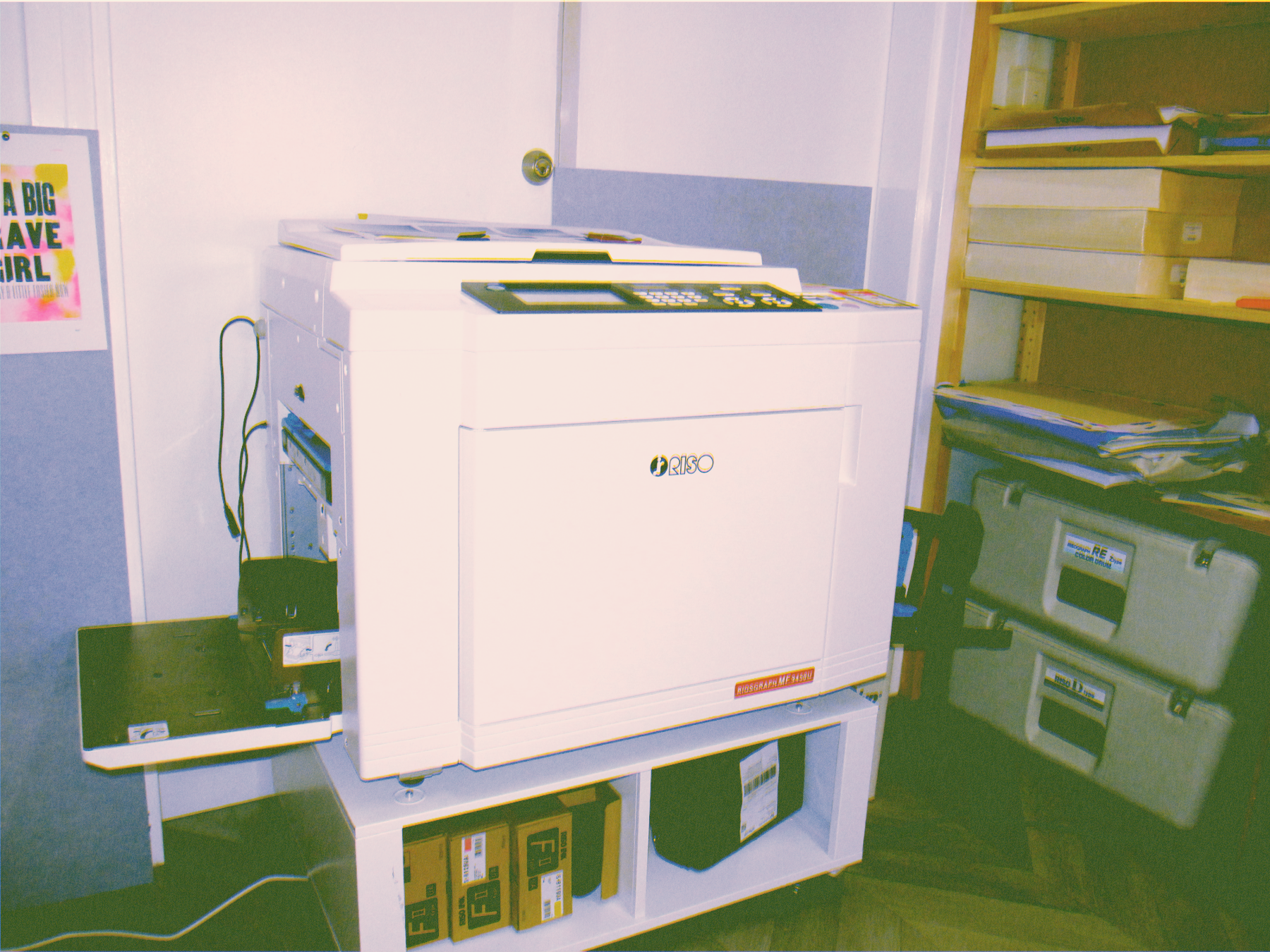
Risograph printing sits somewhere between a photocopier and a screen-printing press. It is a digital stencil duplicator that layers bright soy-based inks to create wonderfully imperfect prints.
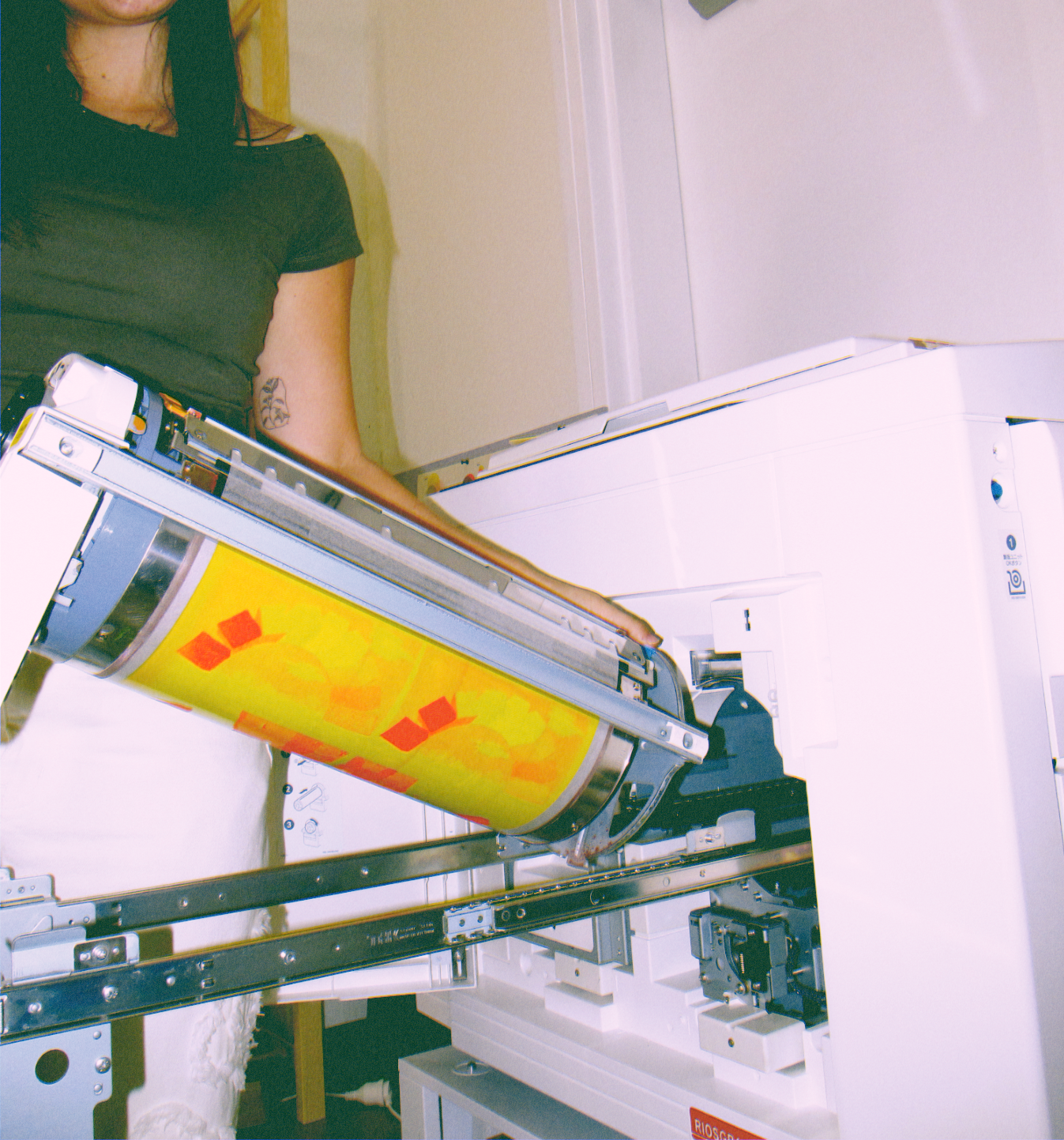
A very clever little duplicator.
Born in Japan in the 1980s thanks to the Riso Kagaku Corporation, it was originally made for speedy office copies but quickly won the hearts of artists and designers. These days, the Risograph lives its best life in studios and print labs, celebrated for its vibrant colours, tactile textures, and charming unpredictability.
How it works
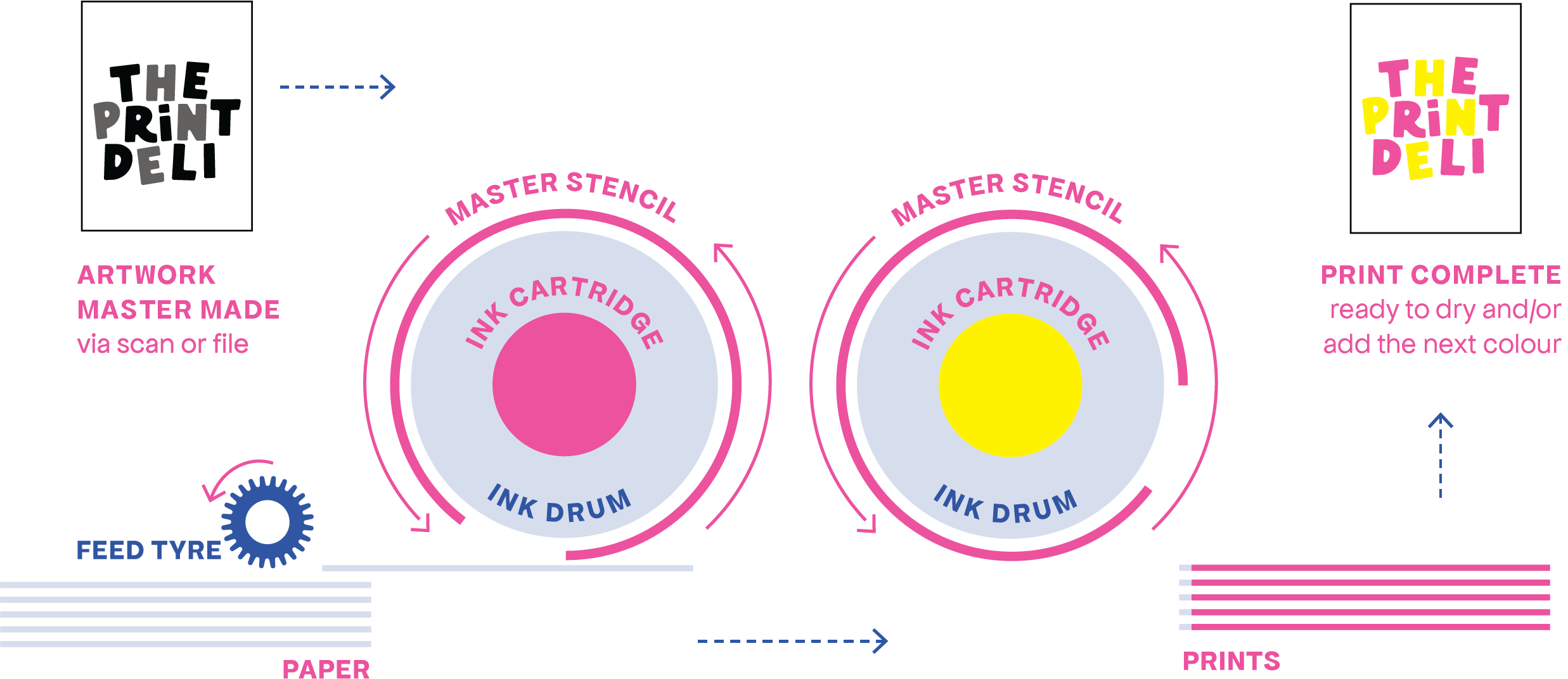
Risograph printing works a little differently to your standard printer. Instead of printing everything at once, each colour is printed one layer at a time.
1. Prepare your artwork
Start with a hand-drawn design scanned directly on the Riso, or digital artwork prepared as separate single-colour layers.
2. Make the master
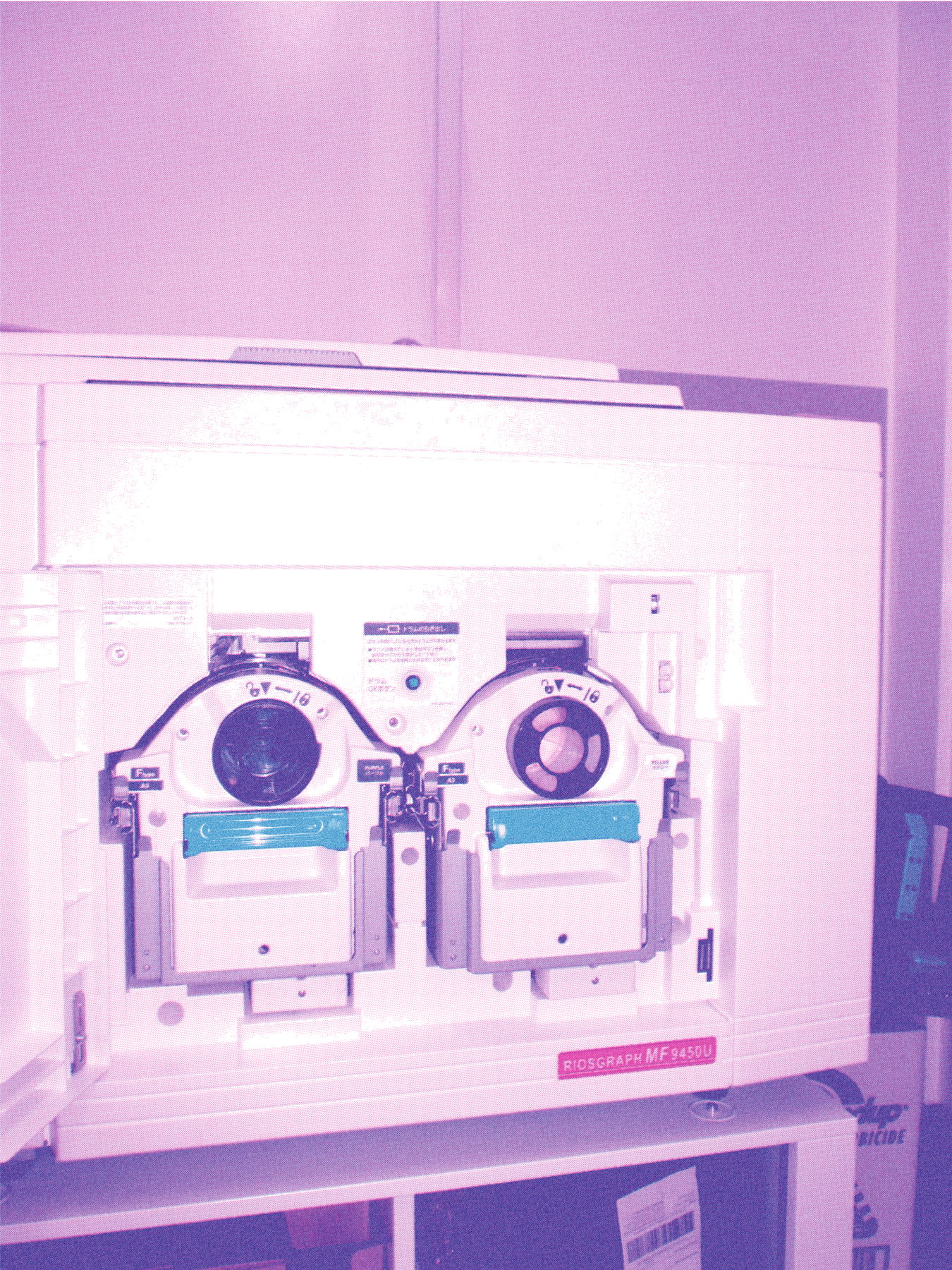
For each colour, the Risograph creates a stencil called a master. This wraps around the ink drum and controls where the ink is printed.
3. Print each colour
Ink is pushed through the master and onto the paper. Each colour is printed separately, allowing layers to overlap and create new colours, textures and effects.
4. Layer it up
Once one colour is printed, the next layer is added. Slight shifts between colours, uneven coverage and unexpected overlaps are all part of the process.
No two Riso prints are exactly the same, and that’s part of the magic. Expect a little misregistration, plenty of texture and the occasional happy accident.
Our Riso has two drums, so it can print two colours in one pass! More colours? We swap drums and run the sheets through again.
What can riso make?
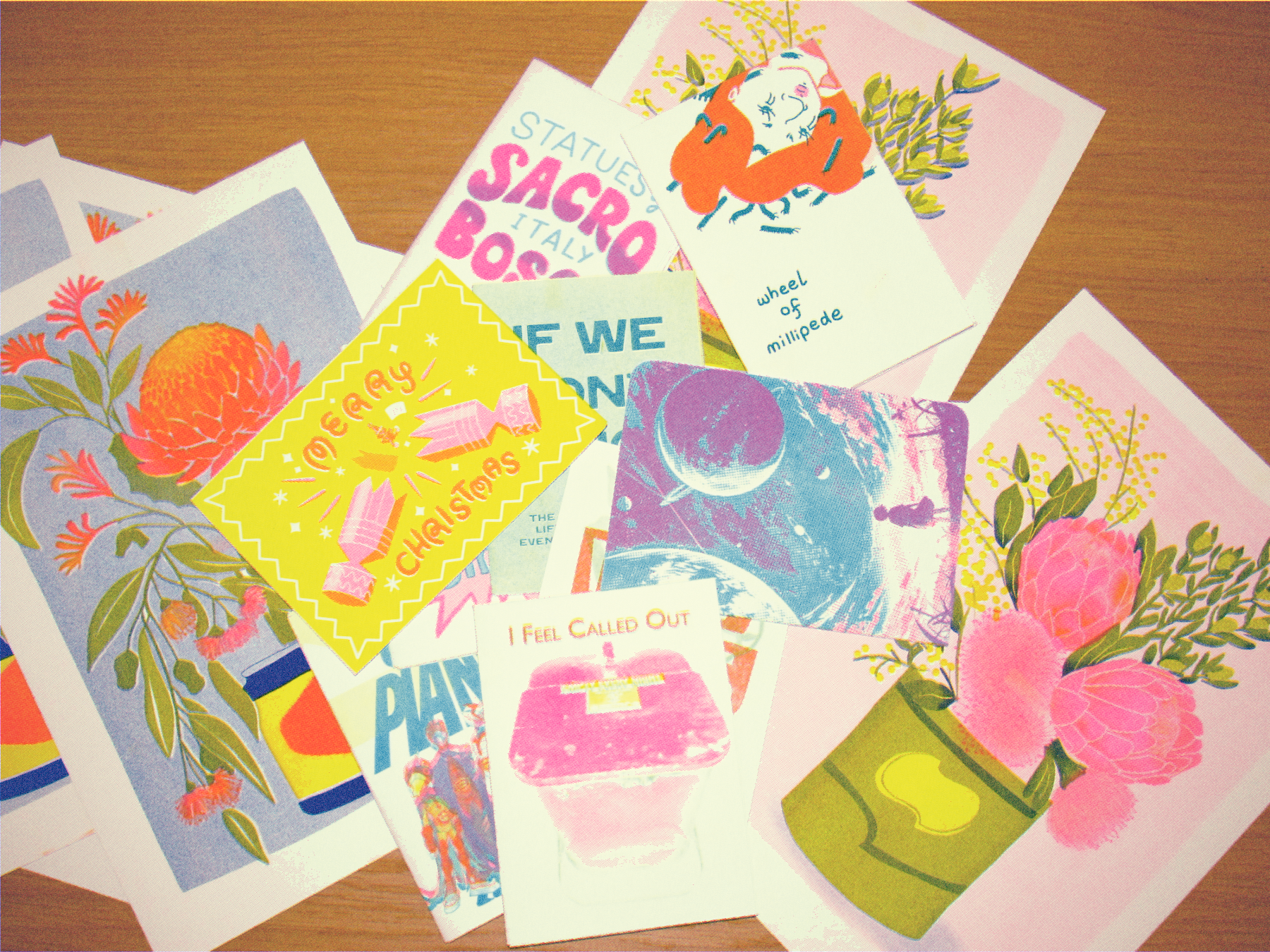
Riso is brilliant for posters, art prints, zines, invitations, cards, flyers and short-run editions. It works especially well with bold shapes, limited palettes, linework, photographs and artwork that benefits from visible texture rather than a perfectly polished digital finish.

Paper & ink
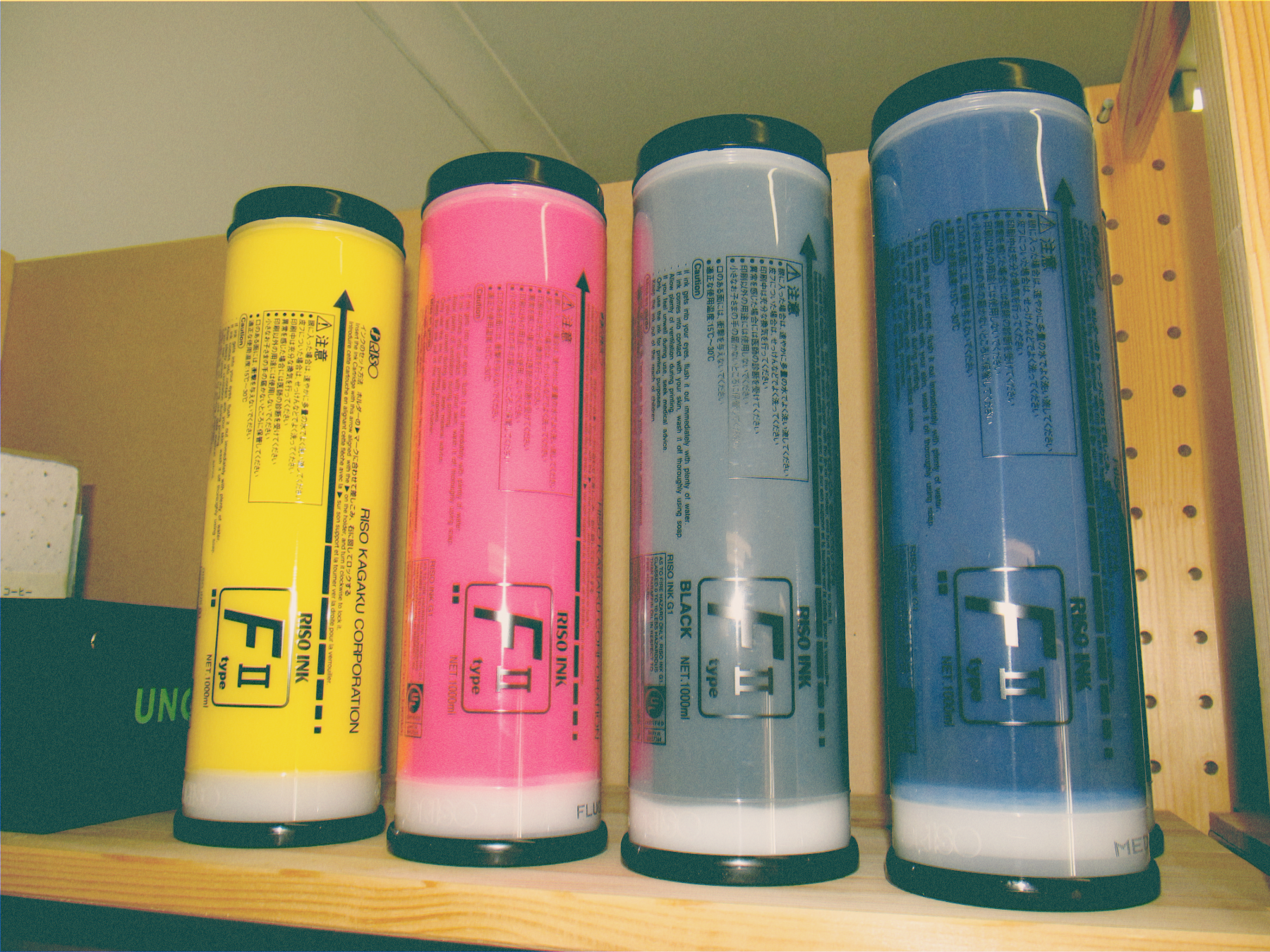
Riso is as much about the ink and paper as it is about the machine. The inks are rich, translucent and made to overlap. The paper needs enough tooth to absorb them properly. Choosing the right combination can completely change how your finished print feels.
Our RISO loves uncoated stocks up to 250 gsm, where the ink soaks in beautifully for vibrant, tactile prints full of character
The big thing to know is that most Riso inks are translucent. When one colour is printed over another, the two layers interact rather than simply covering each other. That means two ink drums can create three, four or even more visible colours depending on the artwork and ink density.
the quirks of riso
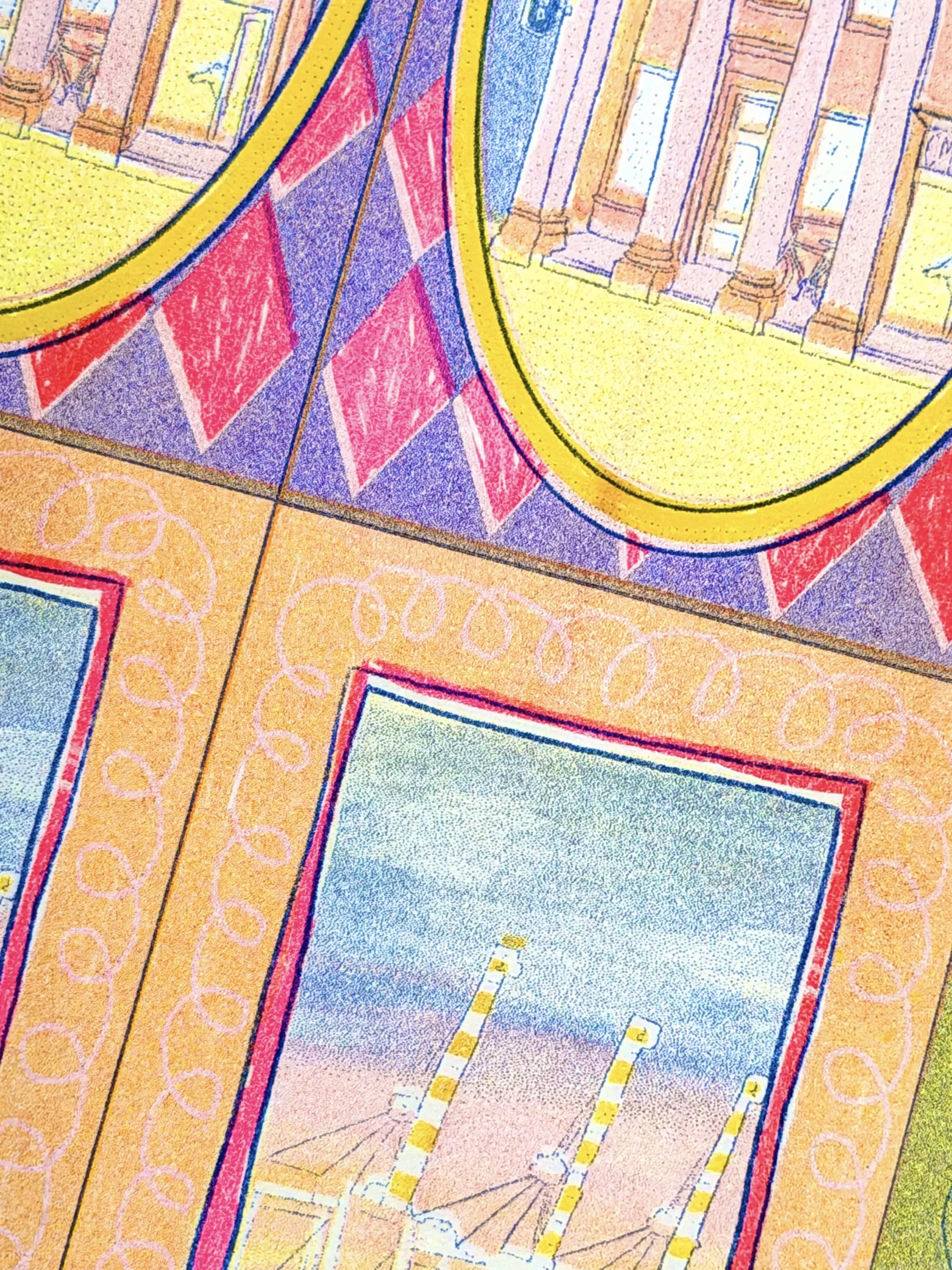
Riso printing isn't about perfection, and that's part of its charm! Each print has its own little quirks, from shifting colours to unexpected textures. Here's what to expect:
Misregistration
Each colour is printed separately, so layers don't always line up perfectly. Slight shifts, gaps and overlapping edges are all part of the process.
Uneven Ink Coverage
Large areas of solid colour can appear a little patchy or textured. Rather than a perfectly flat finish, you'll get that signature Riso grain.
Smudging & Roller Marks
Riso ink absorbs into the paper rather than being heat-set, so heavy ink coverage can sometimes smudge or leave faint roller marks as the paper moves through the machine.
Happy Accidents
No two prints are exactly alike! Small variations in colour, texture and alignment are what give Riso its unique, handmade character.
If you're after perfectly identical prints, precise colour matching or a completely smooth finish, Riso might not be the right fit. But if you love a little unpredictability, you're in the right place.